Shukokai Karate

Graham Slater • July 10, 2026

Speed, Power and Biomechanical Efficiency
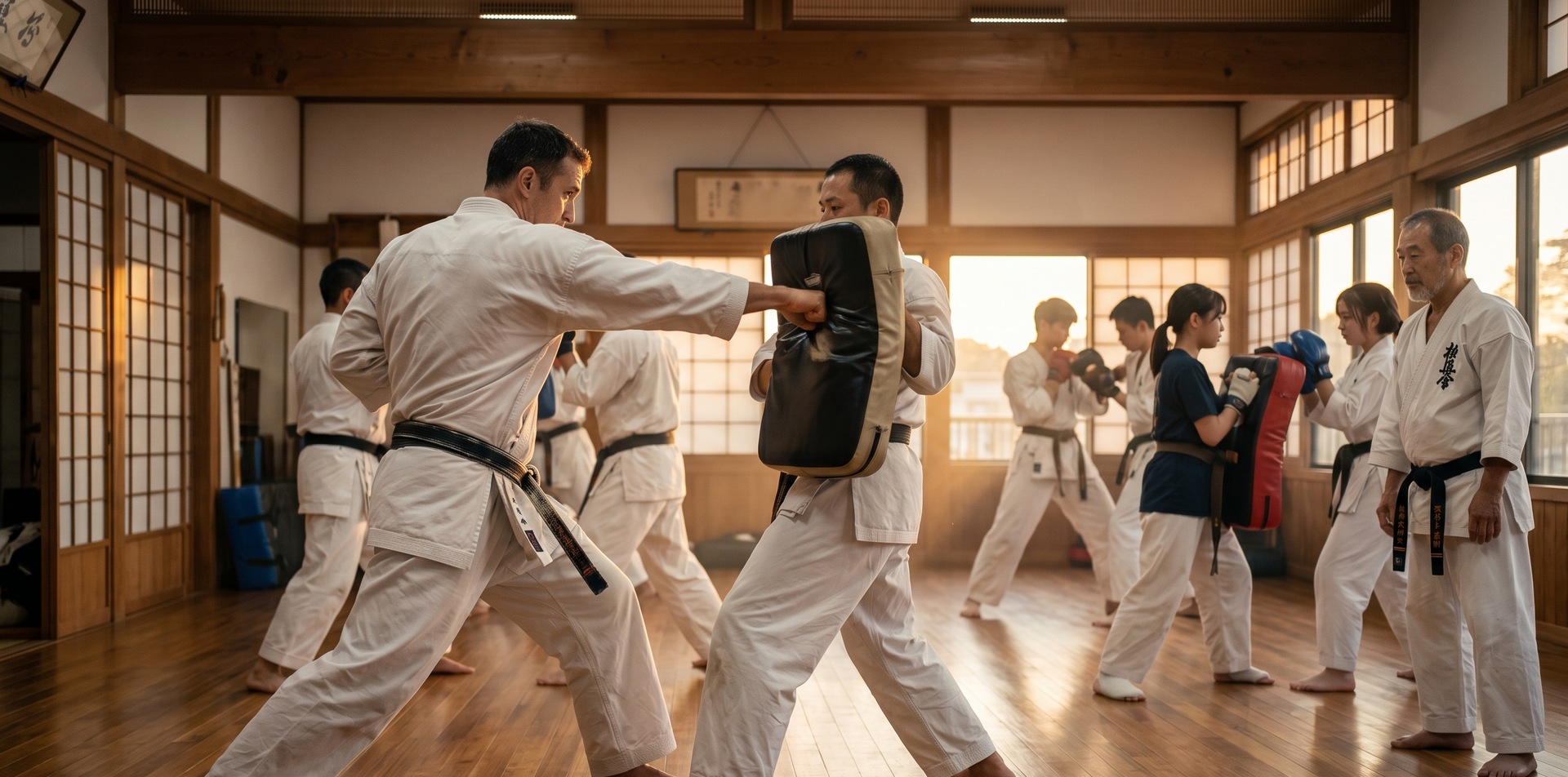
If you were to walk into a Shukokai dojo, the first thing you’d likely notice isn’t the silence of meditation or the complexity of a long, traditional form. Instead, it’s a sound—a sharp, explosive crack that echoes off the walls every time a student strikes an impact pad. It’s a sound that suggests something very different is happening here.


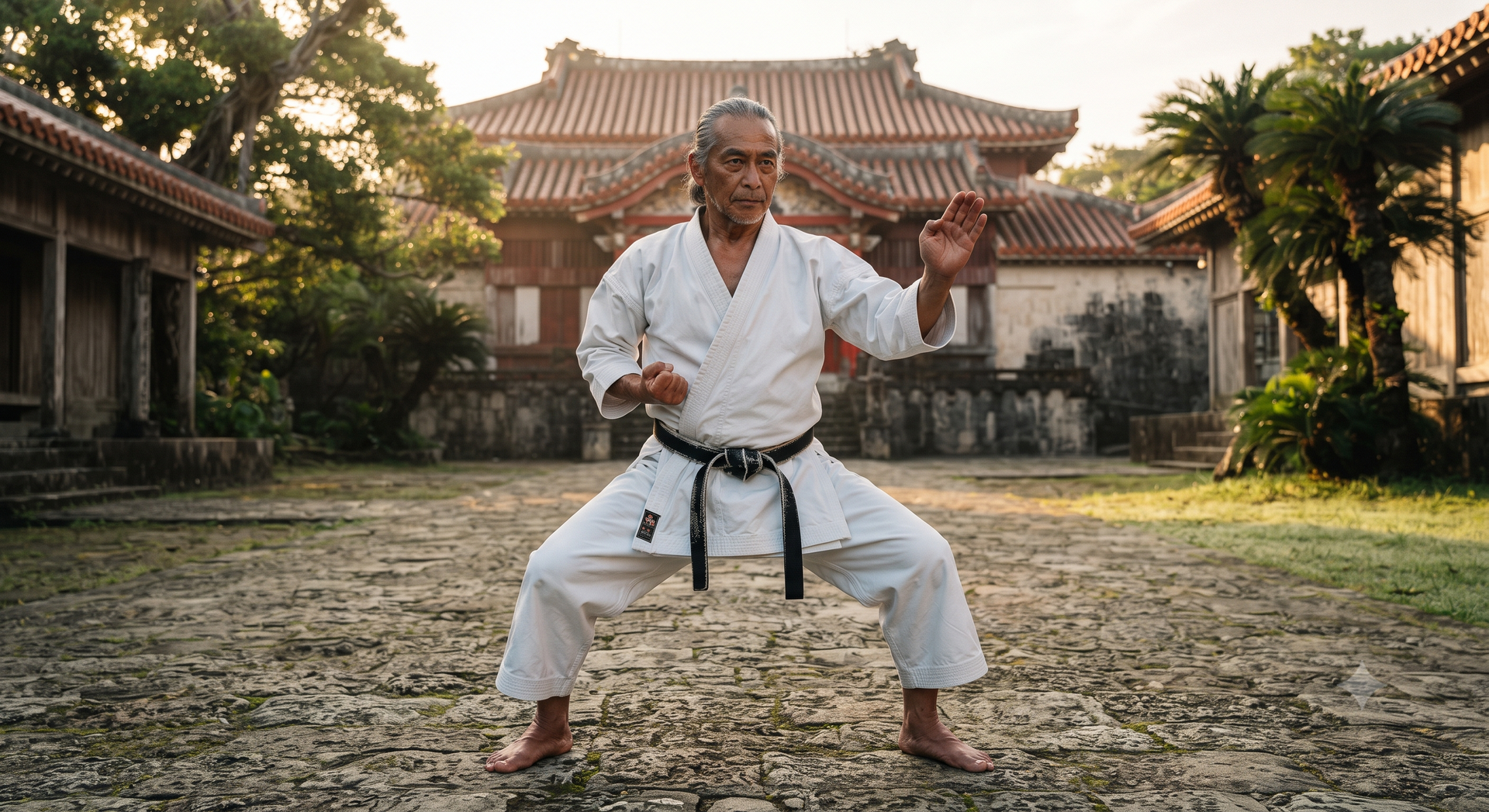
In our ongoing Martial Arts Australia series, "Every Style Has Value," we have explored the "Empty Hand" through various lenses—the discipline of Shotokan, the grit of Kyokushin, and the fluidity of Goju Ryu. But Shukokai holds a special place in the martial arts world as the "Physicist’s Karate." It is a style that took the ancient wisdom of Okinawa and ran it through the rigorous filter of modern biomechanics.

For the Australian practitioner, Shukokai offers a compelling proposition: How can we produce the maximum amount of force with the minimum amount of wasted energy? It is an art of efficiency, speed, and devastating impact.


The "Way for All": The Origins of Shukokai

The word Shukokai translates roughly to "The Way for All" or "The Association for All." This name reflects the inclusive vision of its founder, Chojun Tani.


Tani was a high-level student of Kenwa Mabuni (the founder of Shito Ryu). After World War II, Tani began to explore how Karate could be taught more effectively by understanding the way the human body actually moves. He established his own school, Tani-ha Shito-ryu, which eventually became known globally as Shukokai.


However, the man who arguably did the most to define the "Shukokai sound" was Shigeru Kimura. A student of Tani, Kimura was obsessed with the mechanics of impact. He felt that many traditional Karate techniques were too rigid or relied too much on arm strength. He spent his life experimenting with hip rotation, weight transfer, and the "kinetic chain," eventually developing what many consider to be the most powerful punch in Karate.


When Kimura brought Shukokai to the West, and eventually to Australia, he didn't just bring a set of moves; he brought a laboratory mindset. He encouraged students to question why a move worked and how it could be made faster and stronger through better physics.


The Biomechanics of Power: The "Shukokai Snap"

At the heart of Shukokai is a deep fascination with biomechanical efficiency. While some styles focus on deep, static stances to build power, Shukokai practitioners often stand higher and more naturally. This isn't because they lack discipline, but because they prioritize mobility and speed.


1. The Hip Twist (The Engine)

In Shukokai, the hips are the engine of every technique. While all Karate styles use the hips, Shukokai employs a unique "double hip" movement or a high-speed vibration of the pelvis that acts like a whip. Instead of a slow, heavy push, the hip twist in Shukokai is explosive and instantaneous.


Think of it like a golfer’s swing or a pitcher’s throw. The power starts in the feet, travels through the legs, is amplified by the rotating hips, and is finally "snapped" out through the fist or foot.


2. The Kinetic Chain

Shukokai teaches that the body is a series of interconnected links. If one link is weak or mistimed, the power "leaks" out before it reaches the target. Training in a Shukokai dojo involves a constant refinement of this timing. A student learns to keep the upper body relaxed—almost "soft"—until the absolute micro-second of impact. This relaxation allows for maximum speed; only at the point of contact does the body solidify into a "Hard" state (Kime).


3. Impact-Based Training

One of the defining characteristics of Shukokai is the use of the impact pad (often called a mats or shukokai pad). Unlike some traditional schools where students spend most of their time punching the air, Shukokai practitioners spend a vast amount of time hitting heavy, hand-held pads.


This provides an immediate feedback loop. You cannot lie to an impact pad. If your alignment is slightly off, or if your hips didn't rotate correctly, the pad doesn't move and the sound is "thuddy." When the biomechanics are perfect, the pad explodes with a sharp crack, and the holder feels the shockwave go right through them. This focus on "measurable impact" makes Shukokai a very honest and practical style to practice.


Technical Characteristics: Speed and Versatility

Because Shukokai was born from Shito Ryu, it retains a massive technical library. However, it filters those techniques through its "speed-first"

philosophy.

  • Higher Stances: Shukokai stances are generally shorter and more upright than Shotokan. This allows for rapid footwork and the ability to change direction instantly—a vital skill in both sporting competition and self-defence.
  • The "Heavy" Punch: Despite the emphasis on speed, a Shukokai punch is famously "heavy." This is because the practitioner is taught to "throw" their entire body mass into the strike, rather than just "pushing" with the shoulder.
  • Scientific Kata: Shukokai practices many of the traditional Shito Ryu kata, but the performance is different. There is a focus on the explosive transitions between movements. Every "block" is treated as a strike, and every strike is delivered with the intent to end the conflict immediately.


The "Way for All" Philosophy: Inclusivity and Community

The name Shukokai isn't just a label; it’s a mission statement. Chojun Tani believed that Karate should be accessible to everyone—regardless of their size, age, or natural athletic ability.


Efficiency Over Muscle

Because Shukokai relies on physics and biomechanics rather than raw muscular strength, it is a fantastic style for people who might be smaller or lighter. It teaches you how to use your body's natural structure to overcome a larger opponent. This makes it an incredibly empowering art for children and women.


A Collaborative Dojo Culture

Because of the heavy use of impact pads, Shukokai requires a high degree of cooperation. You cannot train effectively without a partner who knows how to hold the pad correctly and provide the right level of resistance. This creates a "collaborative" atmosphere in the dojo. Students are constantly helping each other find that "sweet spot" of power.


Shukokai in Australia: A Thriving Tradition

Australia has long been a stronghold for Shukokai. Since the late 1960s and 70s, when the style first landed on our shores, it has grown into a massive community with a presence in almost every state.


The "Australian" Shukokai experience often blends traditional Japanese discipline with our local sporting culture. We tend to be a very sports-science-oriented nation, and the biomechanical focus of Shukokai fits perfectly with the Aussie desire to "train smart."

Whether it’s in the suburbs of Melbourne, the coastal towns of New South Wales, or the growing clubs in Queensland, Shukokai dojos are known for being friendly, high-energy spaces. They produce world-class athletes who excel in WKF (World Karate Federation) competition, but they also remain deeply committed to the traditional values of respect, humility, and self-improvement.


Every Style Has Value: The Lesson of Shukokai

At Martial Arts Australia, our "Every Style Has Value" project is about celebrating the different "solutions" martial arts have found for the same problems.

  • If Shotokan is the power of the foundation...
  • And Kyokushin is the strength of the spirit...
  • Then Shukokai is the power of the system.

The lesson Shukokai teaches us is that intelligence is a weapon. You don't have to be the biggest person in the room to be the most effective. By understanding the laws of physics and the mechanics of your own body, you can achieve extraordinary things.


Shukokai teaches us to:

  1. Seek Efficiency: Don't just work hard; work smart.
  2. Focus on Impact: Don't just go through the motions; make sure your efforts are having a real effect.
  3. Be Adaptable: Stay light on your feet and be ready to move when the situation changes.


Is Shukokai Right for You?

Shukokai is a vibrant, fast-paced, and intellectually stimulating martial art. It might be the perfect fit for you if:

  • You Love Physics and Mechanics: You find yourself asking "how does that work?" and you enjoy refining the small details of a movement.
  • You Want a Practical Workout: You prefer hitting pads and feeling the "impact" of your training rather than just performing solo forms.
  • You Value Speed and Agility: You prefer to be mobile and fast rather than rooted and heavy.
  • You’re Looking for a Community: You want to train in an environment that values cooperation and mutual growth.

You don't need to be in "fighting shape" to start. Shukokai is designed to take you as you are and help you build a body that is fast, strong, and efficient.


Take the Next Step on the Mat

Are you ready to experience the "explosive" power of Shukokai? Whether you’re an adult looking for a new challenge or a parent seeking a disciplined and fun environment for your child, the Shukokai community across Australia is ready to welcome you.


Martial Arts Australia is committed to connecting students with high-quality, legitimate martial arts schools. Use our directory to find a Shukokai dojo near you and experience first-hand why this "Way for All" has become one of the most respected styles in the world.

Martial Arts Masters Blog

By Graham Slater July 9, 2026
If you walk into any martial arts school across Australia on a Tuesday night, you’ll witness a scene that is both deeply familiar and remarkably unique. In one suburb, you might see the crisp, white uniforms of a Shotokan Karate class moving in perfect, powerful unison. Five kilometres away, a group might be practicing the slow, rhythmic flow of Tai Chi in a local park. Elsewhere, a high-energy Taekwondo class is focused on the snap of a roundhouse kick, while a Wing Chun practitioner is working on the quiet, tactile sensitivity of Chi Sao . To the uninitiated, these scenes might look like entirely different worlds. But to those within the community, they are all threads in the same rich, global tapestry. For years, the martial arts world has occasionally been distracted by the "style vs. style" debate—an attempt to find a singular "best" way to train. However, as our community matures, we are seeing a shift toward a much more nuanced perspective: the understanding that every style has inherent value. This isn't just a polite sentiment; it is a recognition that martial arts systems evolved to solve different human problems. This article serves as the opening chapter of a long-term educational project by Martial Arts Australia . Our goal is to explore the history, philosophy, and technical beauty of the world’s many systems, moving away from division and toward a culture of mutual respect. The Roots of Diversity: Why We Don’t All Move the Same Way The sheer variety of martial arts can be overwhelming. Why are some styles low and rooted, while others are upright and mobile? Why does one focus on breathing and another on impact? The answer lies in history and geography. Martial arts did not develop in a vacuum; they were shaped by the specific challenges of the societies that created them.  Culture and Warfare: Systems designed for the battlefield, where soldiers wore heavy armour, naturally prioritised stability and weapons-based movements. Conversely, systems that emerged for civilian self-defence in crowded marketplace settings often focused on close-quarters grappling and quick, deceptive strikes. Geography: Terrain plays a hidden role in how we move. Styles developed in mountainous regions often emphasise strong legs and balance, while those from softer, flatter ground might allow for more expansive footwork. Philosophy and Religion: Many arts were influenced by Zen Buddhism, Taoism, or Confucianism. For these systems, the goal wasn't just physical victory, but spiritual cultivation. The movement became a form of "moving meditation," where the focus was on the internal state of the practitioner as much as the external technique. When we understand why a style looks the way it does, the "better or worse" argument fades away. We begin to see a Hapkido joint lock or a Wushu form not as a competing product, but as a sophisticated solution to a specific historical or personal need. The Modern Practitioner: A Journey of Many Paths In the past, a student might have joined a local club simply because it was the only one in town. Today, Australians have incredible access to a world of traditions. What’s interesting is that while most people start for a singular reason—fitness, for example—they often stay for reasons they never anticipated. The Physical Layer: Fitness and Function For many, the journey begins with the body. Martial arts offers a unique kind of "functional" fitness that a gym workout rarely matches. It’s about coordination, explosive power, and flexibility. A teenager might find their athletic identity in the high-kicking demands of Taekwondo, while an older adult might find that Tai Chi provides a path to mobility and balance that preserves their joints and improves their quality of life. The Mental Layer: Discipline and Resilience Beyond the physical, there is the "hidden" curriculum of the dojo. Martial arts is one of the few environments left in modern life where we are encouraged to fail, learn, and try again in a safe, structured way. Confidence: This isn't about arrogance; it’s the quiet self-assurance that comes from knowing you can handle physical and mental pressure. Focus: In an age of digital distraction, the requirement to be "present" during a kata or a sparring session is a powerful mental reset. Emotional Control: Learning to keep a cool head when you are tired or frustrated is a skill that translates directly to the boardroom, the classroom, and the home. Understanding the Focus Areas To appreciate the diversity of styles, it helps to look at where they place their emphasis. While most comprehensive systems touch on everything, every school usually has a "north star" that guides its training. 1. The Self-Defence Focus Some systems are built from the ground up for practical, real-world application. They prioritise efficiency over aesthetics. You’ll see this in styles like Wing Chun , which focuses on centreline control and economical movement, or Hapkido , which uses an opponent's energy against them through redirection and joint manipulation. For these practitioners, the value lies in situational awareness and the ability to end a conflict as quickly as possible. 2. The Competition and Sport Focus Others have evolved into highly sophisticated sporting structures. Taekwondo , Kyokushin Karate , and Wushu have all developed tournament formats that push the limits of human athleticism. Competition isn't just about winning medals; it’s a laboratory for testing timing, speed, and mental toughness under high-pressure conditions. It has also been the primary way martial arts has been introduced to the wider global public. 3. The Health and Wellness Focus For some, the "art" is a path to longevity. Tai Chi is perhaps the most famous example, but many traditional systems include "internal" components that focus on breathing, posture, and the cultivation of energy. The value here is in the long-term maintenance of the human machine—keeping the body supple and the mind calm well into old age. 4. The Traditional and Philosophical Focus Many schools see themselves as the custodians of history. They preserve the lineage of the founders, the traditional etiquette, and the philosophical teachings that have been passed down for generations. Styles like Shotokan or Shaolin Kung Fu often maintain strict traditional frameworks. For these practitioners, the value is in the connection to something larger than themselves—a lineage that stretches back through time. Deep Dive: The Evolution of Karate Karate is a perfect example of how one "root" can grow into a forest of diverse styles. Originating in Okinawa as a blend of local traditions and Chinese influences, it eventually migrated to mainland Japan and then the world. Kyokushin: Known for its "Full Contact" philosophy, it prioritises physical toughness and the ability to endure. Goju Ryu: A beautiful blend of "hard" and "soft," focusing on close-range fighting and deep, circular breathing. Shotokan: Characterised by long, deep stances and powerful, linear techniques, it emphasises discipline and fundamental perfection. Wado Ryu: A unique blend that incorporates Japanese Jujutsu, focusing on evasion and body shifting rather than just meeting force with force. Each of these styles is "Karate," yet the experience of training in a Kyokushin dojo is vastly different from a Wado Ryu dojo. Neither is "more" Karate than the other; they are simply different interpretations of the same fundamental principles. Deep Dive: The Breadth of Chinese Kung Fu If Karate is a forest, Kung Fu is an entire ecosystem. The term "Kung Fu" (or Wushu ) covers hundreds of distinct styles. Southern Styles: Often characterised by strong, stable stances and intricate hand techniques (like Hung Ga ), reflecting the crowded environments and boat-based living of southern China. Northern Styles: Known for being expansive, acrobatic, and kicking-heavy, taking advantage of the open spaces of the North. Wing Chun: A system of "applied geometry," focusing on the most direct path to the target. Tai Chi: A sophisticated system of movement that hides powerful martial applications behind a facade of slow, gentle motion. The diversity of Chinese arts reminds us that there is no single "correct" way for a human being to move. There is only the movement that fits the individual and their goals. The Korean Tradition: Precision and Power Korean martial arts have a distinct energy. Taekwondo is world-renowned for its kicking dexterity and its status as an Olympic sport, but the Korean tradition is much broader. Tang Soo Do maintains a strong link to traditional values and structured progression, while Hapkido provides a comprehensive self-defence framework. These styles represent a commitment to high-level athleticism and a rigorous "never give up" spirit that has resonated with millions of practitioners worldwide. A Culture of Respect: The Martial Arts Australia Vision At Martial Arts Australia , we believe that the healthiest thing for our industry and our community is a culture of mutual respect. When we understand that the instructor down the road isn't a "competitor" in a zero-sum game, but a fellow educator teaching a different chapter of the same book, everyone wins. No martial art survives for centuries without offering something meaningful to the human condition. Every style contains lessons in history, every style preserves a unique piece of culture, and every style has the power to change a life for the better. Finding Your Personal Journey If you are at the beginning of your journey, our advice is simple: Explore. Don’t worry about finding the "deadliest" or the "most authentic" style. Look for the school that resonates with your personal goals. Look for the instructor who inspires you. Look for the community where you feel both challenged and supported. Whether you choose the structured discipline of Karate, the fluid grace of Kung Fu, the athletic heights of Taekwondo, or the practical focus of a self-defence system, you are embarking on a path of self-discovery that has no finish line. Join the Conversation This article is just the beginning. Over the coming months, we will be building an educational archive—a library of sorts—that dives into the founders, the techniques, and the modern evolution of these incredible arts. We want to help students find the right schools and help instructors share the beauty of their traditions with a wider audience. Martial arts is a personal journey, but it is one we take together. Every style has value. Every practitioner has a story. And every mat is a place of growth. Ready to find your path? If you’re looking to begin your journey or want to explore a new tradition, we invite you to use the Martial Arts Australia directory to connect with legitimate, high-quality schools across the country.
By Graham Slater July 3, 2026
Harmony, Movement and Self-Defence
By Graham Slater July 2, 2026
A Beginner’s Guide to History, Philosophy and Training
Show More