What Is Karate?
A Beginner’s Guide to History, Philosophy and Training
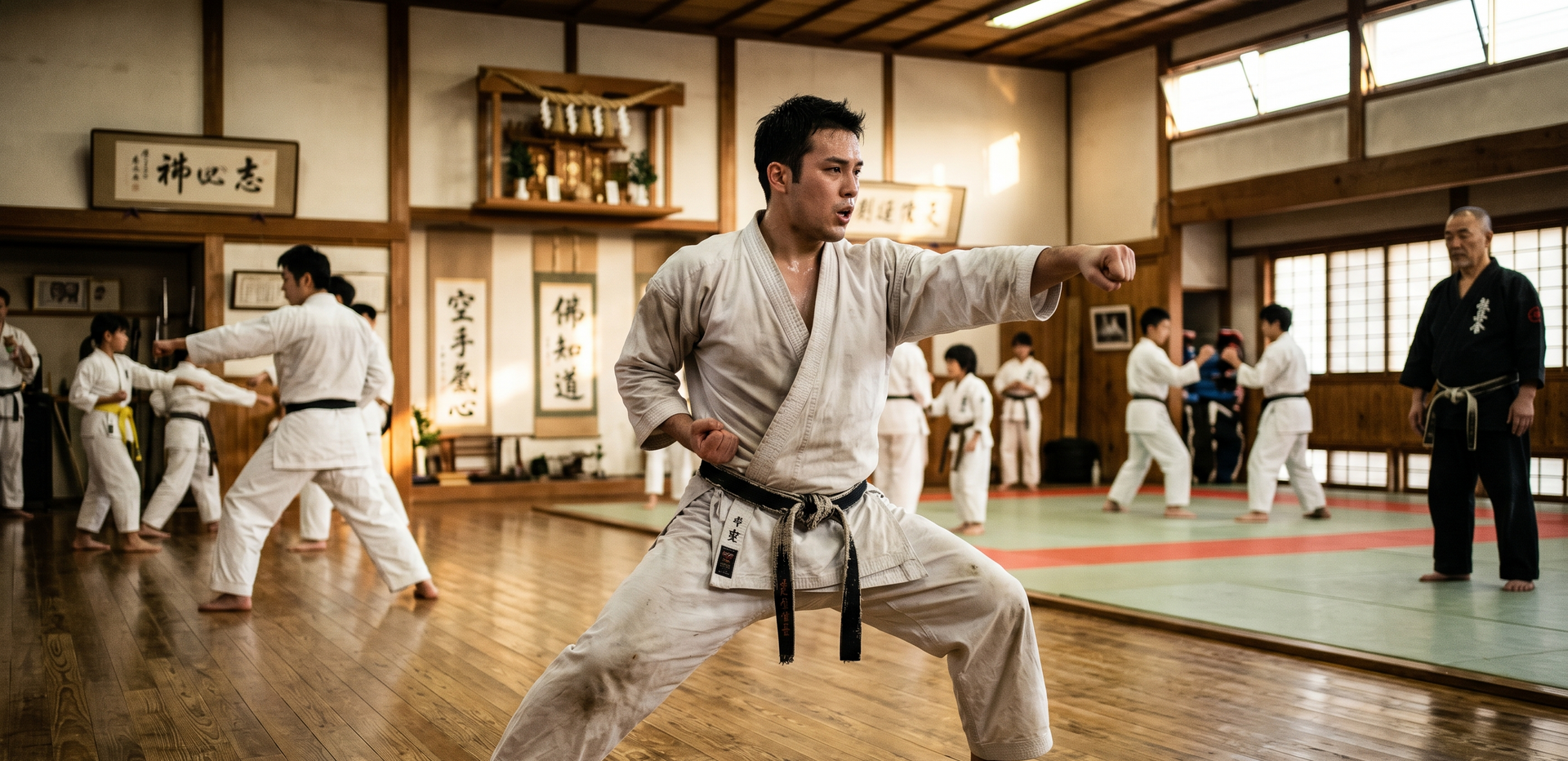
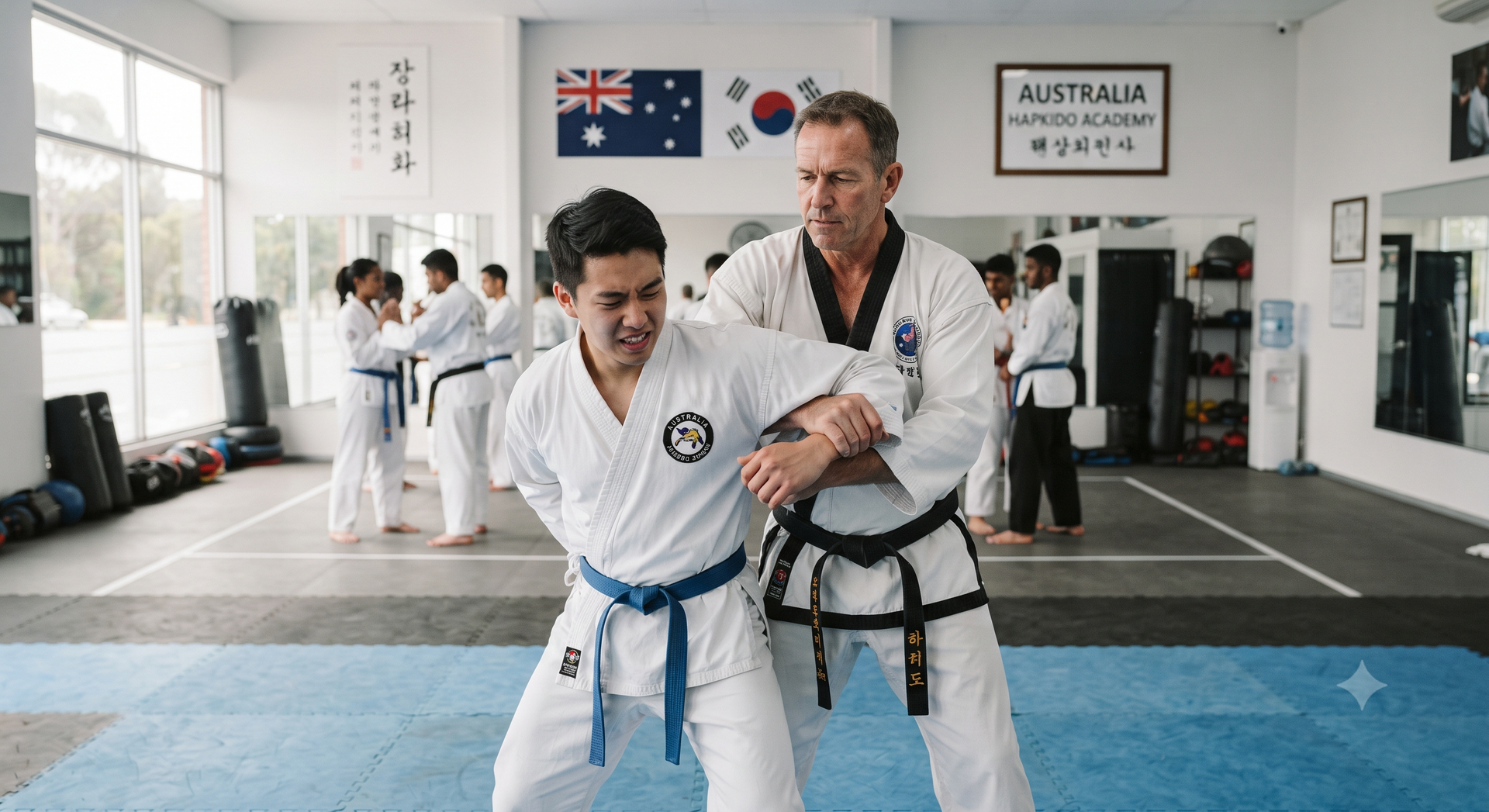
If you walk into a community hall or a purpose-built dojo in any Australian suburb on a weekday evening, you are likely to hear the same rhythmic sounds: the sharp snap of heavy cotton canvas, the focused exhales of breath, and the occasional spirited shout of a kiai. For many, this is the first introduction to Karate—an art that has transcended its small-island origins to become a global phenomenon.
But what is Karate, really? Beyond the cinematic tropes of breaking boards and high-flying kicks lies a sophisticated system of physical movement, ethical development, and mental discipline. For the beginner, the world of Karate can seem like a complex maze of Japanese terminology and rigid etiquette. This guide is designed to pull back the curtain, offering a clear view of where Karate came from, what it stands for, and what you can expect when you first step onto the mat.
The Historical Evolution: From Okinawa to the World
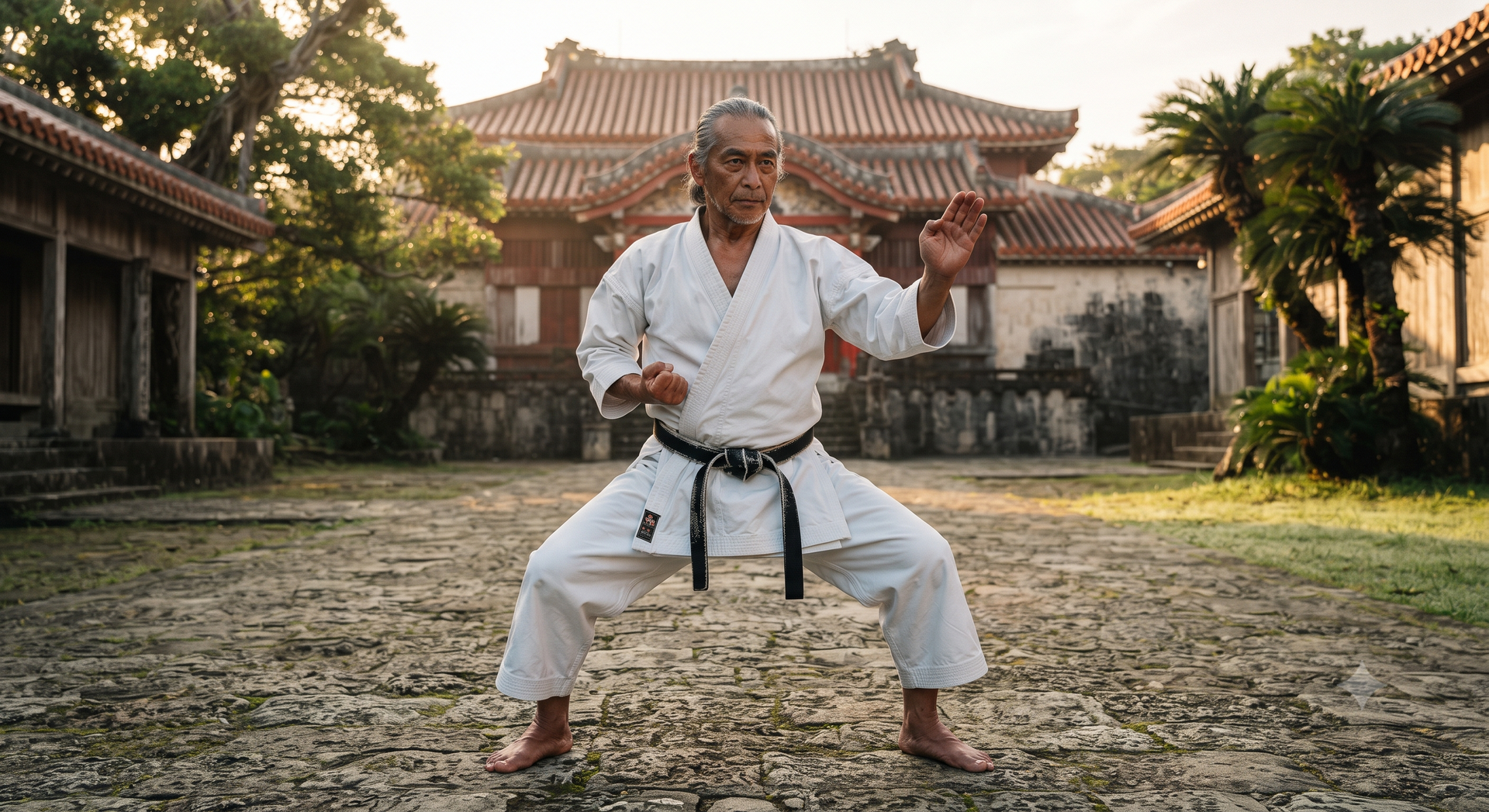
To understand Karate, we must first look to the Ryukyu Islands, specifically Okinawa. Situated as a gateway between Japan and China, Okinawa was a vibrant trading hub for centuries. This unique geographic position allowed local fighting traditions—originally known as Te (meaning "hand")—to intermingle with the refined "Kenpo" systems brought over by Chinese traders and diplomats.
For a long time, these techniques were practiced in secret, often passed down through families or small private groups. It wasn't until the early 20th century that the art began to formalise and move toward the public eye.
The Shift to the "Empty Hand"
The name "Karate" itself carries a profound historical shift. Originally, the characters used meant "Chinese Hand," acknowledging the art's continental influences. However, as the art was introduced to mainland Japan in the 1920s and 30s, the characters were changed to "Empty Hand" (Kara meaning empty, Te meaning hand).
This was a masterful stroke of philosophical rebranding. It described a system where the practitioner was "empty" of weapons, relying solely on their body. More importantly, it drew from Zen principles, suggesting that a practitioner should strive to be "empty" of ego, pride, and malice. Masters like Gichin Funakoshi, who is often regarded as the father of modern Karate, believed that the ultimate goal was not the defeat of an opponent, but the perfection of the practitioner's own character.
The Three Pillars: Understanding the Training Structure
While every school (dojo) has its own specific curriculum, almost all traditional Karate training is built upon three foundational pillars: Kihon, Kata, and Kumite. Think of these as the alphabet, the literature, and the conversation of the martial arts world.
1. Kihon (The Fundamentals)
Kihon refers to the basic techniques—the punches, kicks, blocks, and stances that form the bedrock of the art. To a beginner, Kihon can feel repetitive. You might spend an entire session perfecting a single lunge punch or practicing the exact angle of a rising block.
However, there is a deep logic to this repetition. Kihon is about building "functional" body mechanics. It teaches you how to generate power from the ground up, how to align your joints to prevent injury, and how to move with maximum efficiency. In Karate, power doesn't come from muscle alone; it comes from the perfect synchronicity of breath, timing, and posture.
2. Kata (The Patterns)
Kata is perhaps the most misunderstood aspect of Karate. To an observer, it looks like a solo "dance" or a choreographed performance. In reality, a Kata is a living library of combat applications. Each sequence of movements represents a fight against multiple imaginary opponents, containing hidden techniques like joint locks, takedowns, and pressure point strikes.
Practicing Kata allows a student to develop rhythm, balance, and "intent." It is a form of moving meditation that requires total mental immersion. In the past, before books or videos, Kata was the primary way the secrets of a style were preserved and passed down through generations.
3. Kumite (The Application)
Kumite, or sparring, is the practical application of the techniques learned in Kihon and Kata. In a beginner-friendly dojo, Kumite is conducted with a high level of control and mutual respect. It is not about "winning" a fight; it is about learning to manage distance, timing, and the psychological pressure of a moving opponent.
Through Kumite, students learn one of life’s most valuable lessons: how to stay calm and analytical when faced with stress. It’s a dialogue between two partners, where each person helps the other grow by providing a realistic, yet safe, challenge.
The Philosophy: Why We Bow
One of the first things a beginner notices is the etiquette, or Reishiki. We bow upon entering the dojo, we bow to the instructor (Sensei), and we bow to our partners.
In the Australian context, where we often value a "laid-back" approach, this formality can feel unusual. However, in Karate, respect is not an optional extra; it is the foundation. The most famous saying in Karate is: "Karate ni sente nashi"—meaning "There is no first strike in Karate."
This philosophy dictates that the skills learned on the mat are for self-defence and the pursuit of justice, never for aggression. The bow is a physical reminder of this. It signifies that you are entering a space of focused learning, that you value the safety of your partners, and that you are committed to using your skills responsibly.
The Dojo Kun
Many schools recite a "Dojo Kun"—a set of five precepts that guide training. While the wording varies, the essence usually covers:
- Seek perfection of character.
- Be faithful.
- Endeavour.
- Respect others.
- Refrain from violent behaviour.
These aren't just words to be chanted; they are intended to be lived. The true test of a Karateka is not how well they punch in the dojo, but how they conduct themselves in their workplace, their school, and their community.
Exploring the Major Styles of Karate
Karate is not a monolith. Over time, different masters emphasized different aspects of the art, leading to the creation of various "styles" or Ryu. Finding the right style for you is often a matter of personal preference and physical goals.
- Shotokan: Known for its long, deep stances and powerful, linear movements. It is highly structured and focuses on the "One Strike" philosophy. It’s an excellent choice for those who appreciate discipline and clear technical progression.
- Goju Ryu: This style balances "hard" (Go) and "soft" (Ju). It features more circular movements, close-range grappling techniques, and a heavy emphasis on traditional breathing exercises (Ibuki). It feels very "earthy" and practical.
- Kyokushin: Founded on the principle of "Ultimate Truth," Kyokushin is famous for its rigorous conditioning and full-contact sparring. It is designed to build an "indomitable spirit" and is often favoured by those seeking a significant physical and mental challenge.
- Wado Ryu: A unique blend of Karate and Japanese Jujutsu. It focuses on evasion (Tai Sabaki) and using an opponent's energy against them, rather than meeting force with force. It is often described as a very fluid and efficient style.
The Belt System: A Path of Continuous Growth
The coloured belt system (Kyū and Dan) is a relatively modern invention, but it serves a vital purpose. It provides a roadmap for the student, breaking a massive, lifelong journey into manageable steps.
For a beginner, the white belt represents a "blank slate"—a mind that is open and ready to learn. As you progress through yellow, orange, green, and brown, the requirements become more complex, and the expectations of your character become higher.
The Black Belt Myth
The most common misconception is that a black belt represents the "end" of the journey. In reality, a first-degree black belt (Shodan) literally translates to "beginning degree." It signifies that the student has mastered the basics and has finally built a strong enough foundation to really start learning. Earning a black belt is not about reaching a destination; it’s about proving that you have the discipline to stay the course.
The Benefits of Starting Your Journey
Why do so many Australians choose Karate today? The benefits extend far beyond the physical moves.
Physical Health and Longevity
Karate is a total-body workout. It improves cardiovascular health, builds core strength, and enhances flexibility. Because of its focus on balance and posture, it is an excellent way to maintain mobility as we age. Unlike some sports that focus on a narrow range of movements, Karate challenges the body in every plane of motion.
Mental Resilience and Stress Relief
The dojo is a "digital-free" zone. For one hour, you are not a manager, a student, or a parent; you are simply a practitioner. The deep focus required for training acts as a form of active mindfulness. Many students find that the stress of the day melts away as they focus on their breath and their movement.
Confidence and Safety
While we hope to never use our skills in a real-world conflict, the knowledge that you can defend yourself creates a quiet, inner confidence. This isn't about being "tough"; it’s about the self-assurance that comes from competence. This confidence often spills over into other areas of life, helping students tackle difficult conversations or professional challenges with more poise.
The Martial Arts Australia Commitment
At Martial Arts Australia, we are dedicated to supporting the integrity and growth of the Australian martial arts community. We believe that Karate—and all martial arts—offer a unique pathway to personal excellence that is accessible to everyone, regardless of age or fitness level.
This series is designed to be an educational resource for the public, helping you navigate the diverse world of martial arts with clarity and confidence. We believe that by understanding the history and philosophy behind the styles, you can make more informed choices about your own training or the training of your family.
Taking the First Step
The most difficult move in all of Karate is not a spinning kick or a complex Kata. It is the single step you take through the dojo door for your very first class.
If you are curious, we encourage you to look past the Hollywood myths and experience the art for yourself. Most schools across Australia are incredibly welcoming to beginners and offer introductory sessions that allow you to get a feel for the culture and the instructor.
Karate is a personal journey, but it’s one that is supported by a global community. Whether you are seeking fitness, discipline, self-defence, or a deeper connection to tradition, the "Way of the Empty Hand" has something to offer.