Brazilian Jiu Jitsu: The Ground Game That Changed Everything
How a Brazilian Family's Obsession Rewrote the Rules of Combat

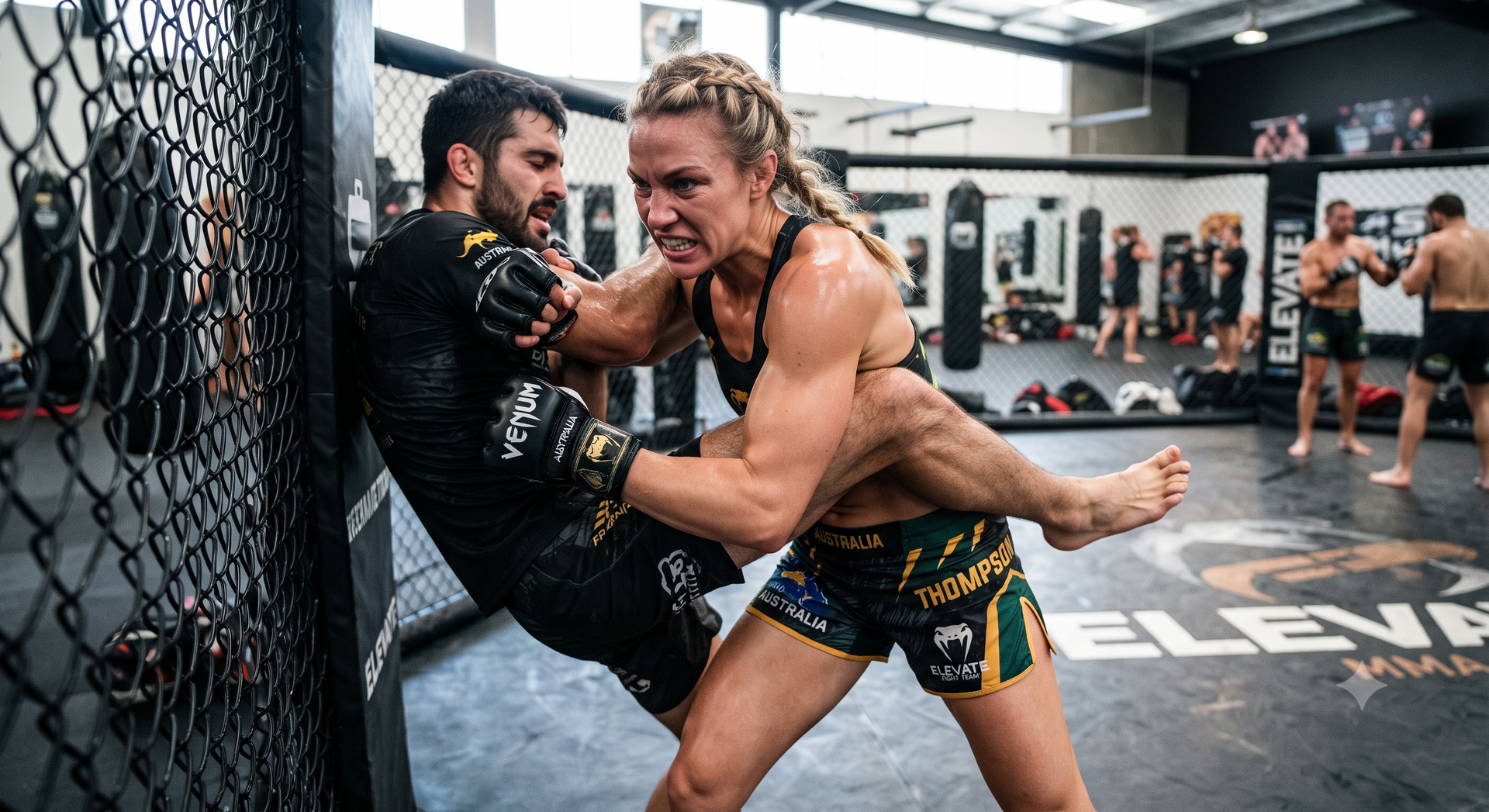
In 1993, a soft-spoken Brazilian fighter named Royce Gracie walked into the first Ultimate Fighting Championship and submitted fighter after fighter from disciplines including boxing, wrestling, and karate, despite being noticeably smaller than most of his opponents. He did it again. And again. The art he was using Brazilian Jiu Jitsu was largely unknown outside Brazil and a small community of martial arts insiders. Within a decade, it had become the most influential grappling art in the world.
That story is not simply about one event or one competitor. It is about what happens when a genuine technical tradition, built on precise, tested principles rather than assumption, meets the rest of the martial arts world and the world has to update its understanding of what works. BJJ updated it profoundly.
The Forge: From Japan to Brazil to the World
The lineage of Brazilian Jiu Jitsu traces to a single extraordinary intersection of cultures. Mitsuyo Maeda was a Japanese judoka, a direct student of Judo's founder Jigoro Kano, and one of the most traveled and battle-tested martial artists of his era. Between 1904 and 1914, Maeda fought hundreds of challenge matches across Europe, the United States, and Latin America, testing the grappling principles of Kodokan Judo against fighters from diverse backgrounds in conditions that were nothing like controlled competition.
When Maeda settled in Belém, Brazil, in 1914, he began teaching. Among his early students was Carlos Gracie, the eldest son of a Scottish-Brazilian businessman named Gastão Gracie who had helped Maeda establish himself in the country. Carlos learned from Maeda for several years, then began teaching his brothers, most significantly Hélio.
Hélio Gracie was smaller and physically weaker than his brothers, and the standard Judo curriculum that worked for them did not translate easily to his body. His response to this limitation produced Brazilian Jiu Jitsu as a distinct art. He systematically modified and refined the techniques he had learned, emphasising leverage, positioning, and the mechanical principles that allow a smaller, weaker person to control and submit a larger, stronger one not through superior power, but through superior position and technique. The ground — the guard, the mount, the back position, the sweep, the submission became BJJ's primary domain, and in that domain, Hélio's refinements produced a system of extraordinary depth and precision.
The Gracie family spent decades testing and validating these principles through open challenge matches, eventually formalized in the vale tudo (anything goes) competitions that were a fixture of Brazilian martial culture for much of the twentieth century. By the time BJJ reached a global audience through UFC 1 in 1993, the principles had been stress-tested across several generations of practitioners against every style imaginable.
The Lineage: Who Is Shaping BJJ Today
The Gracie family remains central to BJJ's global identity, with multiple family members actively teaching and competing across the world. Rickson Gracie, considered by many within the community to be the finest practitioner the family has produced, teaches his own refined approach to the art through Jiu Jitsu Global Federation, emphasising the conceptual and technical depth of the traditional system over the more sport-oriented approach that has developed around competition rulesets.
Roger Gracie, Rickson's nephew, is widely regarded as the greatest BJJ competitor of his generation — a dominant world champion across multiple weight classes and absolute divisions whose game is described by peers as technically perfect rather than physically dominant. His school and instructional materials represent some of the clearest articulation of fundamental BJJ principle available to contemporary practitioners.
Outside the Gracie family, figures including John Danaher a New Zealander teaching out of New York whose analytical, system-based approach to leg locks and back attacks has produced some of the most successful competition teams in recent years have pushed the technical frontier of the art in ways that would have been difficult to anticipate a decade ago. Gordon Ryan, Danaher's most celebrated student, has dominated no-gi competition in a way that has generated widespread technical discussion across the global community.
In Australia, the BJJ community has grown dramatically over the past fifteen years and continues to expand, with world-class training available in every major city and a robust competition scene that connects local practitioners to the global network.
The Strengths: What BJJ Builds
BJJ's most frequently cited strength is also its most practically verifiable one: it works. The principles that Hélio Gracie refined through decades of testing produce demonstrable results in real circumstances, and the nature of BJJ training live sparring from white belt, against fully resisting partners, from day one — means that practitioners develop genuine functional skill rather than theoretical understanding.
The art's emphasis on problem-solving under pressure — the mental process of reading a position, identifying options, anticipating the partner's response, and executing under genuine physical resistance — develops a quality of calm, analytical thinking under stress that transfers well beyond the mat. Instructors consistently report that long-term BJJ practitioners handle pressure differently across areas of their lives, not as a vague claim but as an observable change in how people approach difficult situations.
The community dimension of BJJ is, in my experience, one of its most quietly powerful features. The mat has an extraordinary equalising effect. Students tap out partners who, in any other context, would be their social superior. Rank, wealth, and status are irrelevant when the body mechanics are determining the outcome. What this produces over time is a quality of genuine mutual respect built on shared real experience, not social convention.
Martial Arts Masters Blog