Shito Ryu Karate
Preserving Traditional Kata and Technical Variety
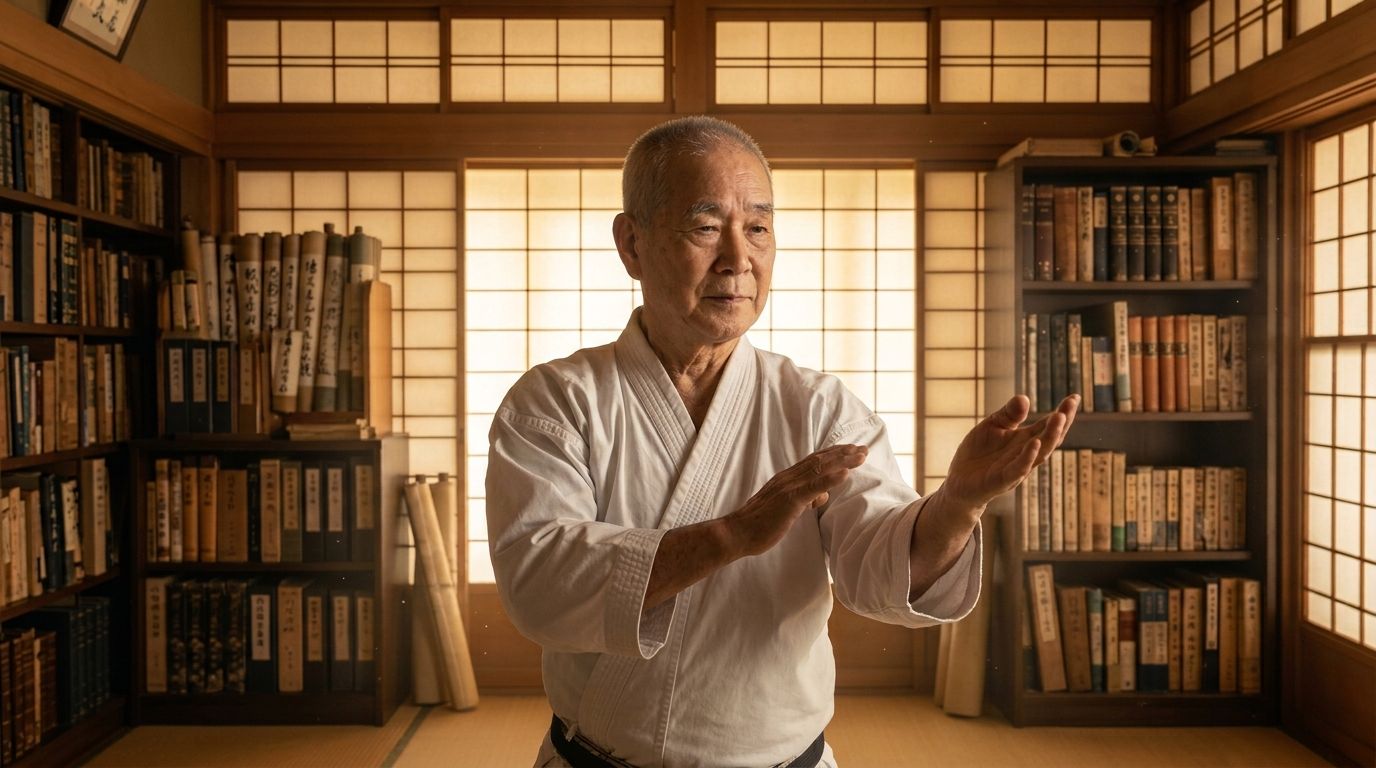
If you were to ask a martial arts historian which style of Karate serves as the "Great Library" of the Okinawan arts, they wouldn't hesitate for a second. The answer is Shito Ryu.
While other styles of Karate are often defined by a specific physical "signature"—the deep, lunging power of Shotokan or the rooted, internal tension of Goju Ryu—Shito Ryu is defined by its staggering breadth. It is a style that refuses to choose between hard and soft, linear and circular, or power and speed. Instead, it attempts the Herculean task of preserving them all.
As we continue the Martial Arts Australia series, "Every Style Has Value," we turn our focus to Shito Ryu. In the Australian martial arts landscape, Shito Ryu practitioners are often recognized for their technical precision and their encyclopedic knowledge of Kata (forms). It is a style that appeals to the "scholar-warrior"—the student who isn't just looking for a workout, but for a deep, lifelong connection to the historical roots of the empty-hand arts.
The Master of Many Teachers: The Origins of Kenwa Mabuni
To understand why Shito Ryu is so diverse, you have to understand its founder, Kenwa Mabuni.
Born in Shuri, Okinawa, in 1889, Mabuni was a descendant of a famous samurai family. He was a physically slight man, which led him to seek out the most efficient methods of combat. Unlike many of his contemporaries who stayed with a single teacher, Mabuni was a relentless seeker of knowledge.
He became a top student of the two most legendary masters on the island:
- Anko Itosu: The master of Shuri-te, known for fast, linear, and athletic movements.
- Kanryo Higaonna: The master of Naha-te, known for close-range grappling, circular movements, and deep, rooted breathing.
The name "Shito" is actually a beautiful tribute to these two men. In Japanese, the first character of Itosu’s name can be read as "Shi", and the first character of Higaonna’s name can be read as "To". By naming his style Shito Ryu, Mabuni was declaring that his art was a bridge between these two vastly different worlds.
The Technical "Swiss Army Knife": Variety as a Strategy
Most Karate styles typically practice between 15 and 25 Kata. Shito Ryu, however, is famous for having anywhere from 60 to over 90 Kata in its curriculum.
To a beginner, this might seem like overkill. Why learn 90 different patterns? But in Shito Ryu, the Kata are not just performances; they are technical "folders." Because Mabuni integrated both the Shuri and Naha traditions—and later added elements of White Crane Kung Fu—the Shito Ryu student has a solution for almost any combat scenario.
1. Linear Power and Speed (The Itosu Influence)
From the Shuri-te side, Shito Ryu inherits lightning-fast footwork and explosive, long-range strikes. This is the "hard" side of the art, where the goal is to end a conflict before the opponent can close the distance.
2. Circular Redirection and Grappling (The Higaonna Influence)
From the Naha-te side, Shito Ryu gains "soft" defensive movements. Instead of meeting a punch with a hard, bone-on-bone block, a Shito Ryu practitioner is often taught to use circular parries, joint locks, and takedowns.
3. The "Pinan" vs. "Heian" Distinction
While many Australians are familiar with the Heian katas of Shotokan, Shito Ryu preserves the original Pinan versions taught by Itosu. These versions often contain subtle differences in timing and application that offer a different perspective on the foundational movements of Karate.
The Five Ways of Defence: Uke no Go-ri
Perhaps the most sophisticated part of the Shito Ryu syllabus is its "Five Principles of Defence." These principles teach a student that there are many ways to handle an attack besides just "blocking" it.
- Rakka (Falling Petals): This is the "hard" block. The idea is to strike an opponent's attacking limb so forcefully that the attack "falls" like petals from a tree. It’s about meeting force with superior force.
- Ryusui (Flowing Water): This is the opposite of Rakka. Instead of resisting, you flow with the attack, parrying it aside as water flows around a stone.
- Kusshin (Elasticity): This involves using the whole body like a spring. You might drop your stance low to avoid a high strike and then immediately "spring" back up with a counter-attack.
- Tensen (Rotation): This is about using the body’s axis. By pivoting or rotating the hips, you step off the "line of fire" while remaining close enough to strike back instantly.
- Henge (Transformation): This is the most advanced principle. It suggests that your defence should spontaneously "transform" based on the opponent’s movement, often blending several of the other four principles together.
For the Shito Ryu practitioner, these five ways ensure that they are never "stuck" in one mode of fighting. They are adaptable, making them very difficult opponents to read.
The Art of the Scholar: Why Australians Love the Detail
Australia has a thriving Shito Ryu community, and it's not hard to see why. As a nation, we tend to appreciate "the right tool for the job." Whether it's in trades, sports, or business, we value versatility.
Shito Ryu offers that same versatility on the mat. In our Australian clubs, you’ll find a unique mix of practitioners:
- The Competitor: Shito Ryu is incredibly successful in the World Karate Federation (WKF) tournament circuit. Because the style is so technically precise and has such a vast library of Kata, it is a favourite for high-level "Forms" competition.
- The Historian: Many adult students are drawn to Shito Ryu because it feels like a genuine connection to the Okinawan past. Every Kata has a story, a lineage, and a specific "why" behind it.
- The Practicalist: Because it includes so much "soft" work (grappling and joint locks), Shito Ryu is often seen as a very practical self-defence system for people of all sizes and ages.
Discipline Through Complexity
In our "Every Style Has Value" project, we often talk about how martial arts builds character. In Shito Ryu, character is built through the discipline of memory and precision.
Learning 60+ Kata requires a level of mental focus that few other activities demand. It’s not just about memorising the moves; it’s about understanding the subtle shift in weight, the specific angle of the wrist, and the precise moment of the breath for every single one.
This "deep work" translates beautifully into daily life. A Shito Ryu student learns that complexity isn't something to be feared—it’s something to be organized, practiced, and eventually mastered. Whether it's an MBA student tackling a complex thesis or a Marketing Manager balancing a distributed team, the "Shito Ryu Mindset" of breaking down complex systems into manageable parts is a powerful life skill.
Longevity and The "Soft" Side
One of the great advantages of Shito Ryu's technical variety is that it can be practiced for a lifetime.
In some "hard-only" styles, the physical toll on the joints can become an issue as practitioners reach their 50s, 60s, and 70s. Shito Ryu, however, allows for a shift in focus. A senior practitioner might spend less time on the explosive "Rakka" movements and more time on the fluid "Ryusui" and "Henge" principles.
This makes it a "lifetime art." It’s an art that grows with you. You don't have to quit when your knees get a bit stiff; you simply explore a different "folder" in the Great Library.
Every Style Has Value: The Lesson of Shito Ryu
At Martial Arts Australia, we believe that the beauty of our community lies in its diversity.
- If Shotokan is the power of the spear...
- And Goju Ryu is the strength of the shield...
- Then Shito Ryu is the versatility of the entire armoury.
The lesson Shito Ryu teaches us is that knowledge is power. By refusing to narrow his vision to just one way of fighting, Kenwa Mabuni ensured that the richness of the Okinawan tradition would be preserved for future generations. Shito Ryu teaches us to be open-minded, to seek out different perspectives, and to understand that "variety" isn't a distraction—it’s a pathway to mastery.
Is Shito Ryu Right for You?
Shito Ryu is an excellent fit for those who:
- Love Learning: If you’re the type of person who is always reading, exploring, and wanting to know the "how" and "why," you will never be bored in a Shito Ryu dojo.
- Appreciate Detail: If you find satisfaction in the "fine-tuning" of a movement until it is perfect, this is the art for you.
- Want Versatility: If you want a system that covers striking, kicking, grappling, and weapons (many Shito Ryu schools also teach Kobudo), it is one of the most comprehensive systems available.
- Seek Traditional Roots: You want a style that respects its lineage and preserves the original forms of the Okinawan masters.
You don't need to be a "natural athlete" to start Shito Ryu. Because the style is so diverse, there is a technical approach for every body type and every age.
Start Your Shito Ryu Journey
Are you ready to explore the "Great Library" of Karate? Australia is home to some truly world-class Shito Ryu instructors who are dedicated to preserving this incredible technical heritage.
Martial Arts Australia is here to help you find a club where you can begin your own personal journey of discovery. Whether you’re looking for fitness, self-defence, or a deep intellectual challenge, Shito Ryu has something valuable to offer.