Shotokan Karate Explained
Structure, Discipline and Traditional Foundation
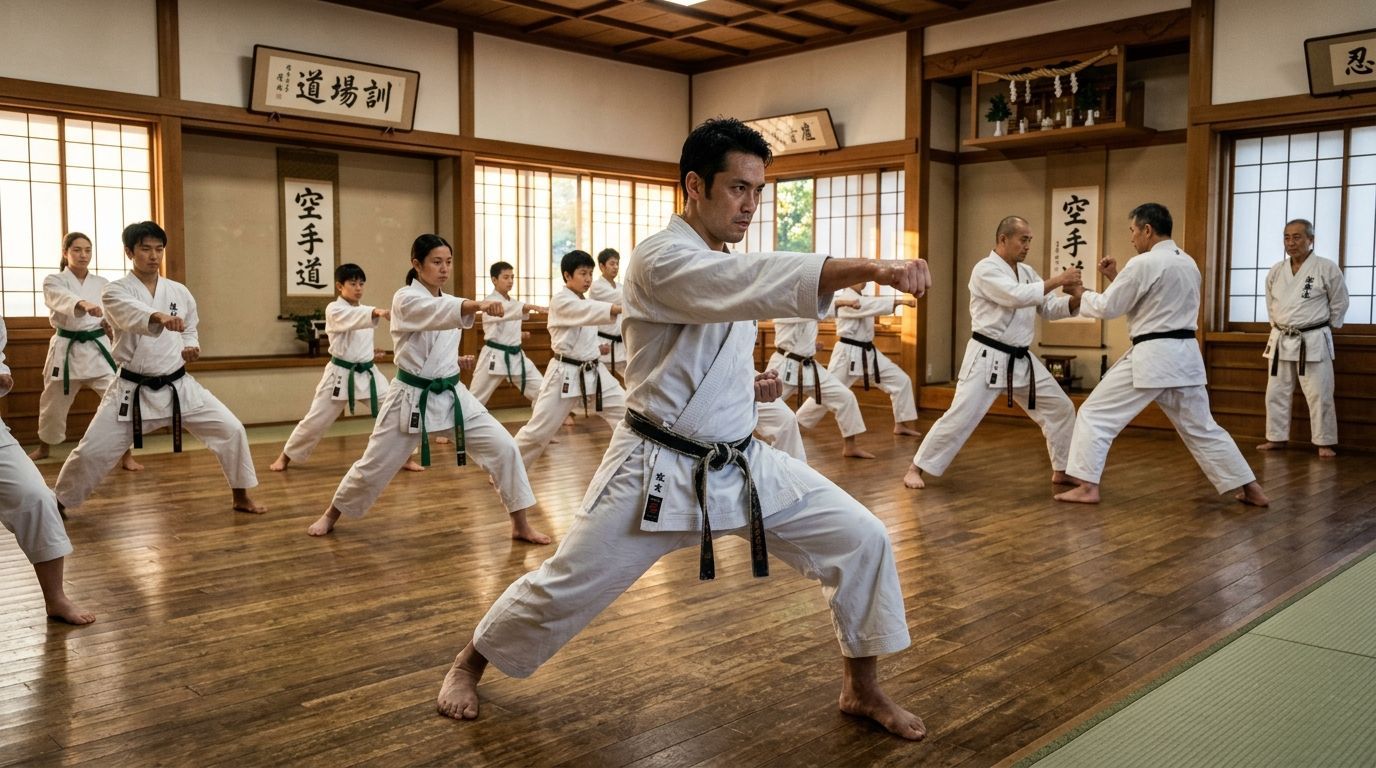
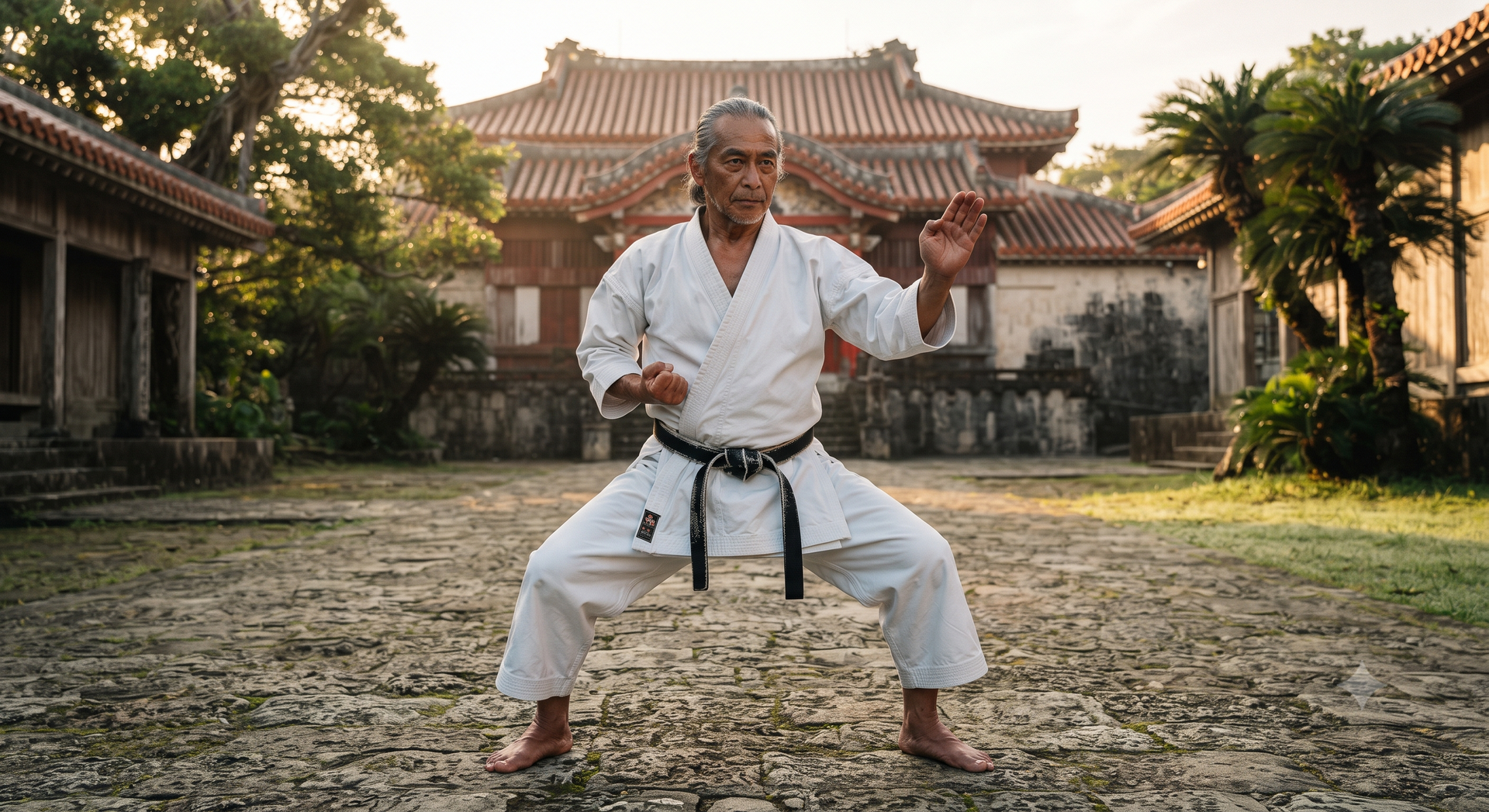
If you were to close your eyes and picture a "traditional" karate class—the crisp white uniforms, the deep, powerful stances, and the sharp, synchronized movements—there is a very high chance you are picturing Shotokan.
Often described as the "Classical Music" of the martial arts world, Shotokan is a system defined by its elegance, its rigorous structure, and its unwavering commitment to the perfection of character. While other styles might focus on the fluid circularity of Kung Fu or the rugged grit of full-contact knockdown fighting, Shotokan finds its beauty in the line, the angle, and the explosive release of energy.
As part of our ongoing Martial Arts Australia series, "Every Style Has Value," we are taking a closer look at the foundations of Shotokan. It is a style that has arguably done more to spread the philosophy of "Karate-Do" (the Way of the Empty Hand) across the globe than any other, and it remains a cornerstone of the Australian martial arts community.
The House of Shoto: The Poetic Origins
Every martial art has a founder, but few founders are as revered for their intellect and poetry as Gichin Funakoshi. A schoolteacher from Okinawa, Funakoshi was a man of letters as much as a man of combat. He wrote poetry under the pen name Shoto, which means "Pine Waves"—a reference to the sound of wind blowing through the pine trees in his home village.
When his students built a dedicated dojo for him in Tokyo in 1936, they placed a sign over the door that read Shotokan, or "The House of Shoto." Funakoshi himself never intended for "Shotokan" to be the name of a style; he simply called it "Karate." However, as the art grew, the name of the building became synonymous with his specific approach to training.
Funakoshi’s great contribution was the "Japanization" of Karate. He stripped away some of the more obscure Okinawan elements to create a system that was structured, educational, and suitable for the physical education of the general public. He believed that the ultimate goal of Karate was not victory or defeat, but the perfection of the practitioner’s character.
The Science of the Stance: Why So Deep?
The most immediately recognizable feature of Shotokan is its deep, long stances. If you watch a Shotokan practitioner perform a basic lunge punch (Oi-Zuki), you will notice their center of gravity is significantly lower than in many other styles.
There is a mechanical and a developmental reason for this:
- Lower Body Strength: Deep stances like Zenkutsu-dachi (front stance) act as a continuous isometric workout for the legs. They build the explosive "spring" power needed to cover distance rapidly.
- Stability and Alignment: By training low, a student learns how to connect their hips and core to the ground. This creates a solid foundation, ensuring that when a punch or block makes contact, the force is backed by the entire weight of the body, not just the arm muscles.
- The "Academy" Effect: Think of deep stances as the "scales" of a piano player. In a real-world self-defence situation, a practitioner might stand more naturally. However, by training at the extreme limit of their range, they develop a level of balance and structural integrity that makes their natural movements twice as effective.
The Concept of Kime: The Art of the Finisher
In Shotokan, the most important technical concept is Kime. It is often translated as "focus," but that doesn't quite capture the physical reality of it.
Kime is the instantaneous tensing of the entire body at the moment of impact. For a fraction of a second, the practitioner transforms from a fluid, moving being into a solid piece of iron. This sudden "stop" focuses all the kinetic energy of the movement into a single point.
This is the origin of the "Ikken Hissatsu" philosophy—the idea of "To finish with one strike." In a Shotokan context, this isn't an aggressive boast; it’s an ideal of efficiency. It suggests that if one’s technique is perfectly refined, a conflict can be ended instantly, reducing the need for prolonged violence.
The Three Pillars: Kihon, Kata, and Kumite
Like most traditional systems, Shotokan organizes its training into three distinct areas. However, in Shotokan, these pillars are treated with a unique level of academic rigor.
1. Kihon (Basics)
In a Shotokan dojo, Kihon is practiced with relentless precision. Students spend years refining the basic "stepping" movements. The focus is on the "trajectories"—ensuring the hand or foot travels the most direct path to the target without any "telegraphing" (wasted movement that warns the opponent).
2. Kata (The 26 Patterns)
Shotokan recognizes 26 core Kata. These range from the five Heian katas (designed for beginners to learn the basic grammar of the style) to advanced patterns like Kanku-Dai or Unsu.
Shotokan katas are characterized by their rhythm and their "explosiveness." There is a clear distinction between slow, tension-heavy movements and sudden, lightning-fast transitions. Practicing these patterns is how a student "downloads" the strategic wisdom of the past masters.
3. Kumite (Sparring)
Shotokan sparring is often described as "Fencing with the fists." Because of the emphasis on Kime and long-range attacks, the sparring is usually focused on timing and distance (Ma-ai).
In a traditional setting, this starts with Gohon Kumite (five-step basic sparring), where every move is predetermined to ensure safety and correct form. As the student reaches the senior ranks, they move into Jiyu Kumite (free sparring). The goal here is "Sundome"—delivering a full-power strike but stopping it millimeters from the target. This requires a level of physical control that is arguably more difficult than actually hitting the opponent.
The Niju Kun: 20 Precepts for Life
Gichin Funakoshi was deeply concerned that Karate could become "just a way of fighting." To prevent this, he left behind the Niju Kun, or the Twenty Precepts. These are rules not just for the dojo, but for life.
Some of the most famous include:
- "Karate begins and ends with courtesy." (The bow is the most important move).
- "There is no first strike in Karate." (The art is purely defensive).
- "Karate is like boiling water; if you do not heat it constantly, it will cool." (The importance of daily practice).
- "Apply the spirit of Karate to everything you do."
For a Shotokan practitioner, the discipline learned in the dojo—the ability to stand still, to focus under pressure, and to respect one's peers—is meant to be carried into their professional careers, their families, and their communities.
Shotokan in the Australian Landscape
Shotokan has a long and storied history in Australia. It arrived in the 1960s and 70s, often through the efforts of dedicated Japanese instructors who traveled here to share the art.
Why has it resonated so well with Australians?
Perhaps it’s because Shotokan offers a sense of order and meritocracy. In a busy modern life, the clear, logical progression of the Shotokan syllabus is very grounding. You know exactly what is required to reach the next level, and you know that the only way to get there is through your own hard work.
Furthermore, Australia has produced some world-class Shotokan competitors. While the traditional "Do" (Way) is about character, the "Sport" aspect of Shotokan has thrived here. The precision required for high-level kata and the timing required for point-sparring appeal to the "sporting" nature of the Aussie psyche.
Every Style Has Value: The Lesson of Shotokan
At Martial Arts Australia, our "Every Style Has Value" series is designed to help you understand the unique "flavour" of each tradition.
If Kyokushin is the "Iron" of Karate, Shotokan is the "Steel"—refined, tempered, and precisely directed. It doesn't seek to be the most "rugged" style, but rather the most "refined."
Shotokan teaches us that:
- Structure is not a cage: It is a framework that allows for mastery.
- Basics are never "basic": Mastery is just the fundamentals performed at a higher level.
- Self-control is the ultimate power: Being able to deliver a devastating blow and stop it an inch from a partner’s nose is the highest expression of martial skill.
Is Shotokan Right for You?
Shotokan is an excellent choice for a variety of people:
- Children: The high level of etiquette and structured discipline is perfect for building focus and respect.
- Detail-Oriented Adults: If you enjoy the "technical" side of things—the physics of movement and the search for perfection—you will find Shotokan deeply satisfying.
- Athletes: The explosive movements and deep stances offer a level of athletic conditioning that is rare in other activities.
You don't need to be flexible or "tough" to start. Shotokan is a ladder; you start on the bottom rung, and the style itself will give you the tools to climb.
Start Your Shotokan Journey
Whether you are looking for a way to improve your physical fitness, find mental clarity, or connect with a tradition that spans generations, Shotokan offers a clear and proven path.
Martial Arts Australia is here to help you find a legitimate, high-quality Shotokan dojo near you. Australia is home to several major Shotokan organizations, each dedicated to preserving the legacy of Gichin Funakoshi while welcoming new students into the fold.